
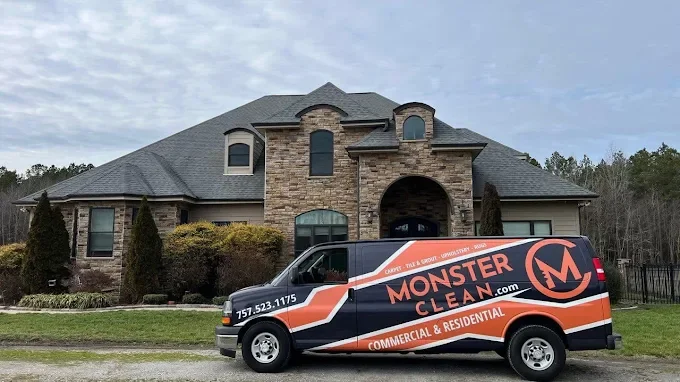
About
Home • About
Professional Carpet & Floor Care Backed by Over 25 Years of Experience
Locally owned and committed to delivering exceptional carpet, upholstery, tile, hardwood, and commercial cleaning services throughout Hampton Roads.
About Monster Clean

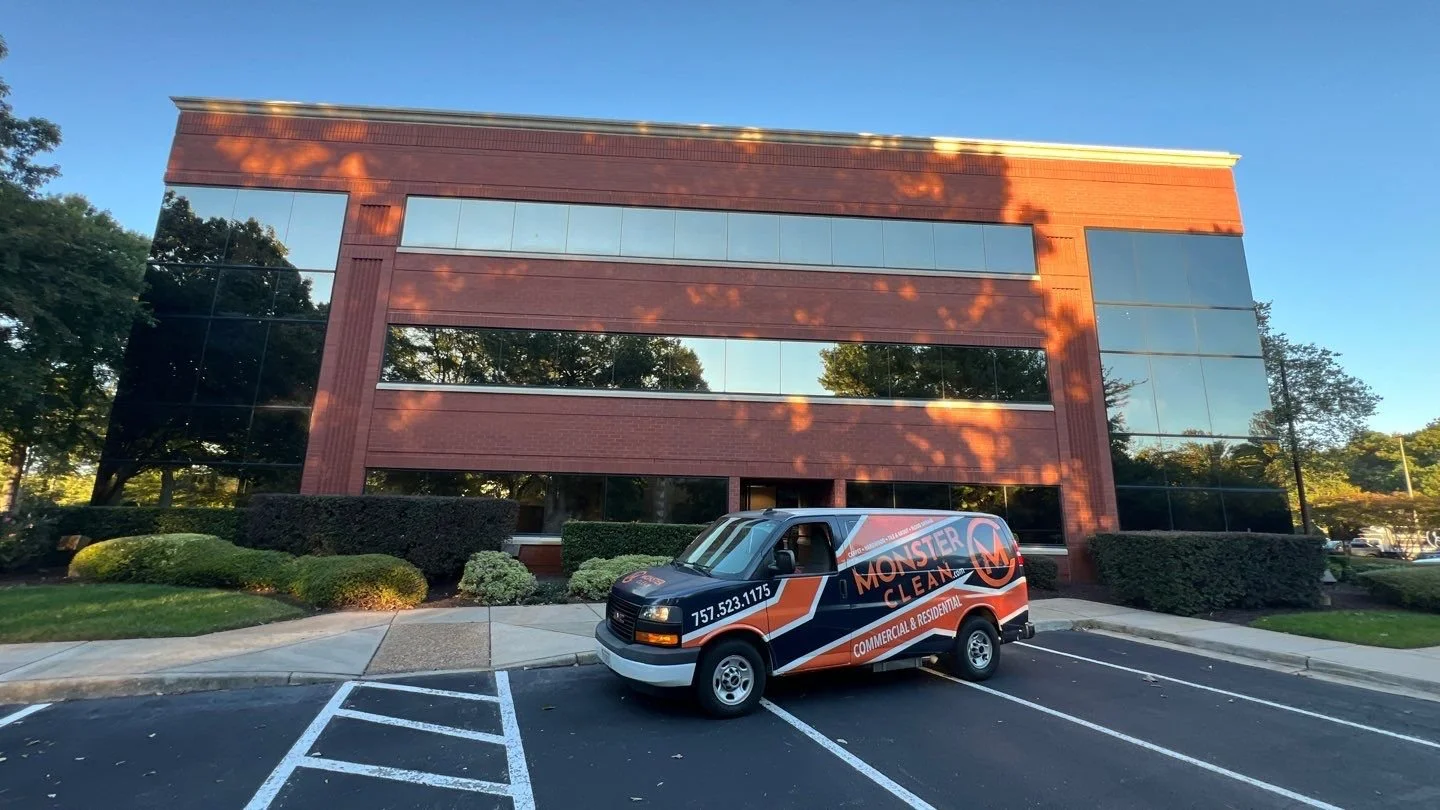
More Than a Cleaning Company
For more than 25 years, Monster Clean has provided professional carpet cleaning, upholstery cleaning, tile & grout cleaning, hardwood floor cleaning, commercial floor care, and emergency water extraction throughout Hampton Roads. We've built our reputation by delivering exceptional results, dependable service, and an outstanding customer experience on every job.
Our experienced technicians use powerful truck-mounted cleaning systems, industry-recommended cleaning methods, and family- and pet-safe products whenever possible. Whether we're cleaning a single room, an entire home, or a commercial property, we believe in honest recommendations, quality workmanship, and treating every customer's property with the care and respect it deserves.
Professional Experience

Honest Recommendations

Exceptional Results


25+
Years
Proudly serving Hampton Roads since 1999, improving homes and cleaning spaces in our community.
7+
Cities
We clean homes and businesses across Hampton Roads. From the coast to the countryside, we’ve got you covered.
6+
Professional Services
We clean carpet, upholstery, rugs, tile, and hardwood, and help you restore your flooring after water damage.
10,000+
Properties Cleaned
We’ve tackled the toughest jobs with clients across industries and homes all over Hampton Roads.
Meet the team

Doug
Owner
Adrianna
Office Manager


Devyaun
Technician
Technician



Technician
Technician
Technician
FAQ
-
Not all carpet cleaning is the same. While some companies advertise extremely low prices, those offers often come with limited cleaning, hidden upsells, or equipment that simply can't deliver the same results.
At Monster Clean, we focus on providing the best overall value, not just the lowest price. Every job includes:
Professional truck-mounted hot water extraction for a deeper clean
Experienced, highly trained technicians who take the time to do the job right
Honest, upfront pricing with no high-pressure sales tactics
Fast dry times that get you back to enjoying your home sooner
Safe cleaning solutions for your family and pets
Attention to detail, from pre-treatment to post-cleaning inspection
Our goal isn't to be the cheapest option. It's to deliver exceptional results that last longer, help protect your investment, and leave you with a cleaner, healthier home.
When you compare the quality of the cleaning, the professionalism of the service, and the overall experience, many customers find that Monster Clean offers the best value, even if our price isn't the lowest.
-
Professional carpet cleaning removes dirt, allergens, and residues that regular vacuuming can't reach, helping extend the life and appearance of your carpet. While every home is different, most households benefit from professional cleaning every 6 to 12 months.
Homes with light foot traffic may only need cleaning every 12 to 18 months, while homes with children, pets, or smokers often benefit from cleaning every 3 to 6 months. Larger families or households with multiple pets may want to schedule service every 3 to 4 months to keep carpets looking and performing their best.
Between professional cleanings, regular vacuuming and prompt attention to spills can help maintain your carpet and prevent stains from becoming permanent. If you're unsure what cleaning schedule is right for your home or business, our technicians will be happy to provide a personalized recommendation based on your carpet type, household, and lifestyle.
-
After Monster Clean has professionally steam cleaned your carpets, they generally dry very quickly (four to six hours in most cases).
Some factors that may shorten or lengthen drying times include:
Weather
If it is hot and humid or damp and dreary your carpets will take slightly longer to dry. Air that is saturated with water simply cannot accept any excess water from your carpets, and therefore cannot contribute to drying.
The good news is that we are in much more control of our indoor weather than we used to be. Modern HVAC systems “condition” the air, removing excess moisture and allow for direct manipulation of indoor temperatures.Fiber types
Nylon fibers for example, may absorb 150 times more water than polypropylene which can have some effect on dry time. In reality, this may lengthen dry times by about one hour.Carpet construction
Berber constructions are tighter weaves, and do not present as large a surface area for evaporation as a pile construction does. A smaller surface area lengthens drying times significantly. Berber carpets may take 12 to 24 hours to completely dry when conditions are less than optimal.Here’s what you can do to shorten drying times
Temporarily set your HVAC fan to the “On” position so that it runs continuously is a good idea. Your HVAC fan is probably set to “AUTO” most of the time, which directs the fan to run only when the system is either heating or cooling your home. If you switch your furnace fan to ON after you have your carpet cleaned this will cause your HVAC fan to continuously circulate the air in your home allowing your carpets to dry more quickly. Note that this will not cause your heat or A/C to run continuously only the fan itself.
Turn on your Ceiling fansIn rooms with ceiling fans, leaving the fan on will help significantly to dry your clean carpet. Setting up other fans, such as box fans will also help, but is certainly not necessary.
Keep all your inside doors open Even doors to areas which you have not had cleaned. Larger air volumes hold more water, and allow for faster transfer of moisture from your carpets. Leaving doors open allows air to flow naturally through your house, and will allow your carpet to dry more efficiently
-
We believe an educated consumer is more likely to buy carpet, upholstery and tile & grout cleaning services from MonsterClean.
Steam cleaning does NOT cause mold growth
Scientific lab studies have shown a complex picture of how mold grows in carpet and how best to avoid the problem.Controlled scientific studies have proven that it is dirt that promotes mold growth much more than humidity. Soiled carpets promoted mold growth, while thorough cleaning reduced the risk of mold growth. Basically put, high humidity plus dirt equals mold.
Clean Carpets vs. Mold
It’s worth noting that if carpet is clean enough, carpet is virtually impervious to any kind of mold growth, despite the conditions. In the studies, clean nylon carpet was subjected to high temperatures and levels of humidity (80 degrees F; 80% humidity) and no mold growth occurred. Even clean carpeting that was known to have active mold spores did not have additional mold growth. Dirt on carpeting grows mold for two reasons. First, the dirt contains mold spores. Second, dirt itself contains moisture. So, the moisture in the dirt combined with the room’s ambient humidity provides a rich breeding ground for mold.
Even worse, dirt is a hygroscopic material, meaning that it readily soaks up any available moisture–whether ambient humidity or surface moisture. In other words, dirt is a moisture-magnet.
-
The Oriental Rug Importers Association (ORIA) recommends hand-made rugs be cleaned every two to four years. Rugs used in heavily trafficked areas such as entry halls may need to be cleaned annually. Removing soil from thick and heavy rugs is more difficult, and cleaning frequency for these rugs should be accelerated to twice the frequency of closely cut and lighter weight rugs.
-
A Master Textile Cleaner is a technician who has satisfied all of the requirements for certification as a Master Textile Cleaner.
The requirements include a minimum three years working in trade after first certification PLUS the following sub-certifications:
Carpet Cleaning Technician
Carpet Repair & Re-Installation Technician
Color Repair
Odor Control
Upholstery and Fabric Cleaning Technician
Water damage Restoration Technician
-
Every hand knotted rug has a “light” side and a “dark” side. The color is due to how you view the rugs nap. Depending on whether one looks into the nap or with the nap, the rug will look lighter or darker and the color intensity you see from one end of the rug may be vastly different from what you see on the opposite end.
This phenomenon is a result of the weaving process. As each knot is hand-tied and pulled down, a directionality is created in the pile, with the nap fibers always pointing toward the bottom of the rug as it hangs in the loom. Once you have your rug in your home, examine it closely from both ends, as you may wish to turn it 180-degrees to ensure the best possible effect for the room it is in.
-
Filtration Soiling is identifiable in carpet as distinct lines of discoloration at points where air hits an obstacle. It is caused by differences in air pressure within a room, or between rooms that forces air through the carpet face fibers where pollutants are (filtered) from the air.
Soil filtration lines occur most commonly at the bottom of baseboard moldings (at the edges of the walls), in the crevices of steps, around spindles and under doors. They can also occur in the middle of a room if conditions are right.
Very fine particle soils (micro occlusion soils) that are suspended in the air and oily vapors from kitchens, fumes from wood or oil fired furnaces, scented candles, and cigarette smoke are some examples of airborne pollutant sources that contribute to visible filtration soil in carpet.
Soil filtration lines composed of oxides of nitrogen or sulfur dioxide can combine with ambient humidity over time to form diluted nitric or sulfuric acid that can permanently alter carpet dyes.
It is possible to reduce or slow the development of soil filtration lines. This can be accomplished by preventing airflow through carpet and carpet edges by sealing cracks in the sub-floor, under baseboards and edges/crevices of stairs. Keep air inside the home as clean as possible by working to reduce indoor air pollutants, such as cooking emissions, fireplace smoke, burning candles, cigarette smoke, and emissions from cleaning chemicals. The installation and regular replacement of high efficiency HVAC air filters is essential to the control of filtration soiling.
Follow this LINK to read what the Carpet and Rug Institute of Dalton Georgia has to say about Filtration Soiling in wall to wall installations of carpets.
-
Silk rugs are a poor choice as a floor covering
As a floor covering, silk rugs are a poor choice because they are much less resistant to permanent soiling than even good quality wool rugs. Silk rugs when new, are often very beautiful, vibrant, soft and elegant, but they are also highly susceptible to rapid soiling and accelerated wear.
Restoration options for soiled silk rugs are limited in scope, much less effective, labor intensive, and costly. MonsterClean recommends silk rugs only for use as tapestries, and as floor coverings only on very special occasions.
-
Water is the universal solvent, and heat amplifies the solvency of water. Anyone who has ever cleaned a greasy stove or oven knows that cold water is a less effective cleaning medium than hot water.
According to “James Swenson”
B.S. 1978, California Institute of Technology, Pasadena CA, Appl. Phys.,from the US Department of Energy:Hot water cleans better because of …
faster reaction rates – (kinetics) heat accelerates all reactions, even mechanical reactions like when water wicks along the surface of a fabric.
speedier dissolving abilities – (due to entropy) even without soap, small amounts of some greases will dissolve in water. In hot water, the amount that will dissolve can be ten times higher.
melting – some greases are low-melting waxes, and being melted makes it easier for the soapy water to penetrate, detach, and surround them. Even things that are not quite melted at least get softer.”
With techniques backed by science and equipment that cannot be surpassed for sheer power, Monster Clean is a titan in carpet cleaning.
Power and Science: That’s the Monster Clean advantage. -
Carpet is not responsible:
In a 15 year long study conducted by the Swedish government, carpet usage was found to reduce the incidence of allergy or asthma. In fact, when carpet usage in Sweden decreased by 70 percent, allergy reactions in the general population increased by 30 percent. Shishoo, R. and Borjesson, A. 1996. Allergy claims ‘unproved’. Carpet and Flooring Review (January 5)..
A more recent study (2002) of nearly 20,000 people in 18 nations found that “fitted carpets and rugs in the bedroom were related to fewer asthma symptoms and bronchial responsiveness”, and that “this effect was consistent across (study) centers and more pronounced among house dust mite-sensitized individuals.” Zock, J.P., D. Jarvis, C. Luczynska, J. Sunyer, and P. Burney. 2002. Journal Allergy and Clinical Immunology 110 no. 2; 285-292.
in 2003, a study of more than 4,600 school children in New Jersey discovered that children with carpeted bedrooms suffered fewer missed school days and experienced a reduced need for asthma medication. Freeman, N. C.G., Schneider, D., McGarvey, P., Household exposure factors, asthma, and school absenteeism in a predominantly Hispanic community. Journal of Exposure Analysis and Environmental Epidemiology (2003).
Testimonials
What Our Clients Says Of Our Service Quality
-
![Five orange stars with 4.8 out of 5 star rating above, and the text "Customer Satisfaction" below.]()
Great job! Used them at home and the office.
Michael V.
-
![Five gold stars in a row with the text "Rated 5 Stars" above them.]()
I had Monster Cleaning services come to a commercial renovation project. They were very prompt, extremely knowledgeable and equally professional. They did a great job. Made the carpets look new again. I will definitely be using them in the future. Highly recommend them for any residential or commercial work. Thanks guys.
Shawn S.
-
![Five orange stars in a row.]()
Came into the office with a sewage back up - not good. Made a call to Monster clean and they were out within an hour and had the mess cleaned up quickly, and we’re back to work. Very professional, highly recommend!
Ryan P.
-
![A five-star rating graphic with five orange stars beneath black text that reads "Excellent".]()
Monster clean did a great job steam cleaning my tile. Very friendly and professional. Would definitely recommend to family and friends.
Samantha D.
-
![Five gold stars with one shaded star, representing a four and a half star rating.]()
We had a tough dirt situation and Corbyn did an excellent job on it. He was super knowledgeable about how to treat it and he got the job done on short notice. Thank you!
Mary R.
-
![Five yellow stars in a row with black text above that says "Rate our service"]()
Monster Clean is a well-run, top notch company. From start to finish they handled every step of the process professionally and with care. They are attentive to customer needs and are patient and accommodating with changes. Doug, the owner, came to the house to provide an estimate. He was friendly and professional, willing to share his knowledge and expertise, and he was patient and careful, wearing booties before coming through the home. He had Corbyn come out to the house. You couldnt find a better representative for a company! Corbyn was soft-spoken, courteous, professional, knowledgeable, friendly, very helpful, and willing to do go above and beyond to please the customer. The result was extremely satisfactory. Everything looked great, and the carpet felt softer underfoot. Couldnt be happier, and we will definitely have them out again. You will not be disappointed if you choose Monster Clean. We are so glad we read the reviews ahead of time and chose them over the competitors. Thank you Doug and Corbyn!
Jacob B.

